Media Releases
American Gelbvieh Junior Association Names 2012-13 Ambassadors
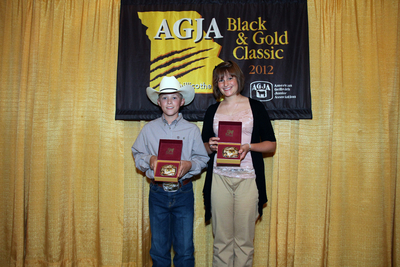
The American Gelbvieh Junior Association (AGJA) created the Ambassador Program to encourage youth involvement in the breed’s activities. The ambassadors represent the AGJA at Gelbvieh functions throughout the year including the National Gelbvieh and Balancer® Show and the national sale in Denver, Colo.
The candidates are judged on their notebook, an oral interview, a speech given at the AGJA Annual Meeting and overall conduct during the annual Junior Classic, the national junior Gelbvieh Show. The notebook includes information and photographs on activities, awards and organizations as well as an essay on the candidate’s background and experiences with the Gelbvieh breed. A committee is appointed to conduct the interviews and select the AGJA Junior Ambassador and Intermediate Ambassador.
Ambassador candidates must be AGJA members and be present at the Classic to be chosen. The junior ambassador is between the age of 8 and 11 years old. The intermediate ambassador is between the age of 12 and 15 years old. Age is based on January 1, 2012. Each ambassador receives a silver belt buckle and an embroidered jacket.
The AGJA is proud to announce the 2012 AGJA Ambassadors, who were selected during the 2012 AGJA Black and Gold Classic held July 1-6 in Chillicothe, Mo. Sydney Bigger, Media, Ill., will serve as the Intermediate Ambassador. Connor Durham, Piedmont, S.C., will serve as the Junior Ambassador.
Sydney Bigger is the daughter of Barry and Jody Bigger. She is an eleventh grade student at West Central High School in Media, Ill. With a 4.0 GPA, she is involved in the Math Team, National Honor Society and Student Council. Outside of school work, she stays active in her community, 4-H club, FFA, and the AGJA. Bigger is a repeat competitor in many of the Classic contests and served as the 2009-2010 AGJA Junior Ambassador.
With a passion for raising and showing cattle, Bigger is eager to promote the Gelbvieh breed. “My passion for Gelbvieh cattle has taught me many things about both cattle and life,” Bigger says. “I would like to represent the AGJA as an ambassador, to tell all people, agriculture enthusiasts or not, about what raising Gelbvieh cattle can teach you.”
Connor Durham is the son of John and Cindy Durham of Piedmont, S.C. As a sixth grader at Wren Middle School, he is involved with 4-H Livestock Clubs, the National Junior Angus Association, Wren Little League Baseball, Meals on Wheels, and the AGJA. He was the 2010 AGJA Rookie of the Year. In March, he sold a record breaking 312 raffle tickets for the 2012 AGJA Beastrom Donation heifer. Durham received the All-Around Eagle Pass Ranch Donation Heifer at the 2012 National Western Stock Show.
“I participated in my first AGJA Classic in 2010. I quickly fell in love with the event and all it had to offer. I hope to attend the AGJA Classic show every year and hope to one day serve on the Board of Directors,” says Durham.
For more information about the AGJA Ambassador Program, visit www.www.gelbvieh.org/juniors.
Photo Caption: The American Gelbvieh Junior Association selected two individuals as part of its Ambassador Program. Connor Durham, Piedmont, S.C., (left) will serve as the 2012-2013 AGJA Junior Ambassador. Sydney Bigger, Media, Ill., (right) was selected as the 2012-2013 AGJA Intermediate Ambassador.
Manage what you can
The blizzard dubbed "Atlas" that hit South Dakota and the surrounding states on October 4, 2013 is gut-wrenching. The total death loss of livestock will take months to tally and probably never be totally known, however are estimated to be in the tens of thousands. Some producers lost the majority of their herds. The after effects in loss from abortion by bred females will add to the economic impact.
It is a grim reminder that in what it takes producers years to build Mother Nature can take away in two days. It is out of our control. It's a feeling of total helplessness for those producers and hard for others to fully comprehend.
As producers deal with the after effects of this tragedy, one thinks about the trials that livestock producers endure. Drought, floods, and blizzards are very difficult if not impossible to pre-plan and manage. When they occur at catastrophic and record setting levels producers take the punch and come back stronger and wiser. They have dealt with adversity before; they know how to come back. They are dedicated to the business. They have a dedication to a way of life most outside the industry cannot comprehend. Some will not recover because the magnitude of loss is too great.
We are fortunate that we do have control over many things in the livestock business. Producers make managerial decisions daily that have a direct effect on the product they produce and how they do it. The majority of our decisions can be managed and are within our control.
Arguably, the most significant decision cow-calf producers make is selecting the genetics introduced into the cow herd. This is a decision producers have direct control over. Based on individual environment restraints and market targets, the decision of which genetics to add is not the same for everyone. Producers have varying needs in the genetics they select. This isn't a bad thing but rather shows that they are managing their total ranch resources and market.
There are certain traits that are, or should be managed and selected for in any environment. Reproduction continues to be the number one trait that has a direct and lasting effect on the profitability of any cow-calf operation. Cows that breed and calve in a short calving interval always are more profitable than those in a herd that do not. Although not highly heritable, good cowmen will tell you that reproduction can be managed and selected for, and can show vast improvements over time. The ability of heifers to reach puberty, get bred and to continue to rebreed year after year is the number one priority for any good cow-calf program. It's number one for increased profitability.
In making management decisions producers determine what breed or breeds are going to be used in their breeding program. Some will make this decision based on what is the "breed of the month" rather than what breeds actually have been proven to add the most profitability to their operation for the long haul.
It has been proven with Meat Animal Research Center data that when compared to other breeds Gelbvieh heifers reach puberty earlier. It has been proven that Gelbvieh cows wean more pounds of calf per cow exposed. It has been proven in research conducted at Colorado State University that Gelbvieh cows have more stayability with a higher conception rate when compared to other breeds. The best testimonial may very well be that when commercial producers are asked why they use Gelbvieh in their breeding programs, the most often response is, "Because they make good cows."
With all that said shouldn't one "manage" to have Gelbvieh incorporated into their breeding program? You do have control and can manage making Gelbvieh part of your breeding program. It is the right decision based on documented third-party research and producer testimonials. There are enough other things that are out of your control, manage the reproductive efficiency of your cow herd with genetics.
###
Opportunities for profitability with Gelbvieh and Balancer®
For more than 40 years the Gelbvieh breed has built a successful track record in the U.S. cattle industry for one reason: No other breed is as commercially focused as Gelbvieh. We've consistently been focused on satisfying the demands of not only commercial cow-calf producers, but also of the feed yard, packer and consumer. Second, we've produced cattle that are trouble-free, that enable commercial producers to raise more pounds per cow exposed with fewer inputs. The Gelbvieh cow is iconic in all aspects of productivity, and more importantly, profitability when compared to other breeds.
Gelbvieh has come to represent a reliable choice for heterosis – the lifeblood of every cow-calf operation. Through increased hybrid vigor from Gelbvieh and Balancer® genetics, our commercial customers have increased cow longevity, livability and overall performance as well added efficiency of production. The packer has gained by getting more carcass weight and retail yield. The consumer has received a tender and marbled product that results in a satisfying eating experience.
The cow-calf segment of the U.S. beef industry lost about 175,000 producers over the past 20 years, which equates to a loss of nearly 9,000 producers per year. Increasing costs, greater risk, and a nationwide push to increase grain production at the expense of the forage base will continue to make it difficult for producers who are not efficient in their production practices in order to remain profitable in the beef business.
With the decline in producers so has come the decline in the U.S. beef cow herd numbers. It has driven prices received in all segments of the beef industry to historic highs. This reduced cattle supply has greatly benefited most cow-calf operations that have their genetic and management practices in order. As well, it creates great opportunity for profitability in the cow-calf sector of our industry in the years to come, as herd rebuilding has just began in some areas where much needed moisture has returned.
Pioneers of our industry and of our breed have given producers the tools to take advantage of the unique opportunity that presents itself. Small supply with big demand means profit for most in any business. We have a tool box full of genetic evaluation and management tools to use to tailor a product that best suits the needs of our customers and ultimately, the consumer. The American Gelbvieh Association offers several ways to assist in marketing and promoting these products. Innovative pioneers take advantage of all.
The AGA's multi-breed EPDs, developed and first published in January 2013, continues the commitment that Gelbvieh breeders have to commercial customers. With the exception of calving ease and stayability, EPDs for all traits are directly comparable across Gelbvieh, Balancer®, Red Angus, Simmental and SimAngus®.
The fact that three of the six largest beef breed associations in the U.S. are sharing the same national cattle evaluation is a great asset for the beef business, especially for commercial producers. It simplifies genetic selection across breeds and sends a clear message that Gelbvieh breeders are committed to doing what is best for commercial producers. It makes the process of evaluating genetic merit between breeds easier. The multi-breed evaluation also provides more robust EPDs because of the combined data of millions of additional animals. The collaboration of these breed associations creates the largest multi-breed genetic evaluation in the world.
The opportunities that lie on the horizon are only as good as our preparation to capitalize on them. That is why the Gelbvieh breed will never waiver in doing what is needed for the best interest of the commercial producer and beef industry as a whole. As Yogi Berra once said, "The future ain't what it used to be."
###
Multi-Breed Genetic Evaluation grows with Gelbvieh
American Simmental Association (ASA) and the Red Angus Association of America (RAAA) are pleased to announce to beef industry stakeholders that their joint, multi-breed genetic evaluation (MBGE) now includes the data of the American Gelbvieh Association (AGA). The addition of Gelbvieh data to the Spring 2013 EPDs pushes the multi-breed dataset to over 11.5 million animal records, and includes four of the seven largest beef breeds in North America – Canadian Angus Association (CAA) having been included since the onset of this multi-breed collaboration.
“We [participating breeds] share the use of thousands of sires due to Gelbvieh’s and Simmental’s use of Red and Black Angus in the production of hybrid seedstock,” said Dr. Wade Shafer, ASA chief operations officer and director of performance programs. Red Angus, Gelbvieh and Simmental all maintain open herd books that provide the basis for thousands of ‘head-to-head’ comparisons across breeds in well-formed contemporary groups. Canadian Angus provides similar opportunities to compare Red and Black Angus genetics.
“Multi-breed genetic evaluation is a very important tool for Gelbvieh breeders as we strive to offer our commercial customers the most reliable EPDs,” offered Dr. Jim Gibb, executive director of AGA. “In addition to being able to account for breed differences, the multi-breed EPD model explains differences in performance due to heterosis. It is imperative for ranchers to be able to accurately compare purebred and hybrid seedstock,” Gibb added.
AGA’s inclusion in this multi-breed collaboration offers another bonus to the beef industry – Gelbvieh EPDs for growth and carcass traits are now published on the same EPD base and scale as Red Angus and Simmental. This allows ranch customers to make direct comparisons across breeds – including hybrid and composite seedstock – for those traits. Greg Comstock, CEO of RAAA, commented that a current goal is to move all traits to a common EPD base for these breeds.
The MBGE model uses pedigree, performance, ultrasound, carcass and genomic data from 50K DNA panels in the calculation of multi-breed EPDs. Another unique feature of the MBGE is that RAAA, ASA, CAA and AGA all utilize some form of “Whole Herd Reporting” which provides improved EPD accuracy through building genetic evaluation on complete contemporary group data.
Comstock summarized the power in what is believed to be the largest multi-breed beef cattle genetic evaluation database in the world, saying, “Through working together, sharing technical resources and pooling data, our respective breeds’ EPDs gain accuracy, our bull customers’ breeding decisions are simplified because and the seedstock we supply is of greater value – not just to cow-calf producers but to downstream segments of the beef industry.”
For more information on multi-breed EPDs, visit any of the breed association’s websites: redangus.org, simmental.org or www.gelbvieh.org.
###
American Gelbvieh Association Hires Brian Rogers
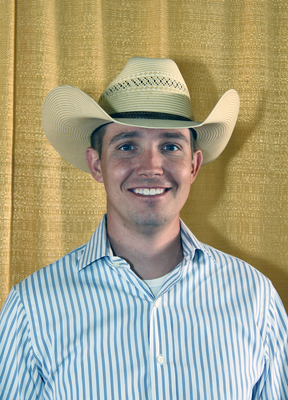
The American Gelbvieh Association is pleased to announce the hiring of Brian Rogers from College Station, Texas. Brian has accepted the position of central region area coordinator for the Association.
Rogers will receive his Ph. D. in Physiology of Reproduction from Texas A&M University, College Station. Additionally, he holds a Master of Science degree in Agriculture, Animal Science emphasis and a Bachelor of Science degree in Animal Science, Biology minor, both from Stephen F. Austin State University in Nacogdoches, Texas.
Outside of his strong academic background, Brian has work experience in production agriculture and assisting both seedstock and commercial beef producers. He has built his own purebred cattle operation, Rogers Cattle and Marketing in Big Sandy, Texas. He was the interim manager of the Stephen F. Austin State University Beef Center, managing 200 commercial cows. Brian has also worked for a couple of purebred cattle operations assisting in their managing and marketing decisions. Furthermore, Brian was a speaker at the Texas A&M Beef Cattle Short Course held in August 2011 at College Station.
“Brian will be an asset in the field for the American Gelbvieh Association, marketing and promoting the Gelbvieh breed. His education coupled with his work experience made him the prime candidate for the area coordinator position. Brian is highly respected among his peers. He possesses the beef industry knowledge, production experience, and marketing ability to be able to assist seedstock and commercial producers add value and create pull through demand for their Gelbvieh genetics,” said Frank Padilla, director of breed promotion for the American Gelbvieh Association.
As the central region area coordinator, Brian will work with Gelbvieh members and commercial producers who use Gelbvieh and Balancer® genetics. He will also handle central region advertising sales for the American Gelbvieh Association’s publications, Gelbvieh World and The Profit Picture.
“I am excited to be the new central regional area coordinator for the American Gelbvieh Association. The strengths of the Gelbvieh breed – moderate mature cow size, low birth weights, more pounds weaned per cow exposed, and carcass cutability – make Gelbvieh and Balancer bulls and females the best choice for commercial cow-calf producers. Please feel free to contact me about how I can assist you,” commented Rogers.
Rogers is currently stationed out of College Station, Texas and represents the central region of the United States. He can be reached at 936-554-1600 or brianr@gelbvieh.org.
National Gelbvieh and Balancer® Sale Averages $8,480
3 Bulls $14,667
1 ½ Embryo Interest $13,000
1 50% Cloning Rights $13,000
8 Pick of Breeder’s Herds $8,500
5 Bred Heifers $5,834
7 Open Heifers $5,857
Gross on 25 Lots $212,000
Average $8,480
The National Gelbvieh and Balancer® Sale kicked off the 2012 sale season with a bang, posting an increased average of $8,480 on 25 lots. Held annually during the National Western Stock Show (NWSS) in Denver, Colo., the National Gelbvieh and Balancer Sale was the first beef cattle sale of the NWSS. The standing room only crowd proved the excitement for and interest in Gelbvieh and Balancer genetics by seedstock breeders and commercial cattlemen. With at total gross of $212,000, the average for the 2012 sale was a 20 percent increase over last year’s sale, and a 75 percent increase from the sale two years ago.
The high-selling lot of the National Gelbvieh and Balancer Sale was Lot 1 at $22,500, the 2012 Breeder’s Choice Gelbvieh Bull Futurity champion. Bred by Plateau Gelbvieh, Peetz, Colo., PLA Big Dog 101Y is a January 29, 2011 purebred son of HYEK Black Impact 3960N. He is homozygous polled, double black and boasts a tremendous EPD profile of: CE 107; BW 0.8; WW 47; YW 81; Milk 18; CW 21; RE 0.23; CV 21.84 and FM 10.42. After active bidding, Locust Hill Farms, Ruffin, N.C., purchased full possession PLA Big Dog. Semen packages were purchased by the following breeders: D Bar D Gelbvieh, Hazelton, N.D.; CJ & L Livestock, Hermosa, S.D.; Diamond D Gelbvieh, Mandan, N.D.; Two Step Ranch & McCabe Cattle Co., Farley, Iowa; and Chimney Butte Ranch, Mandan, N.D.
The second high-seller of the day was Lot 10 at $20,000. This was the pick of the 2011 bull or heifer crop from Bar Arrow Cattle Company, Phillipsburg, Kan. Flying H Genetics, Arapahoe, Neb., was the winning bidder. Bar Arrow Cattle Company showed the grand champion Pen of 5 Gelbvieh bulls and reserve grand champion Pen of 3 Balancer bulls at the 2012 National Western Stock Show.
Lot 5 was the sale of 50 percent cloning right on the black, homozygous polled, purebred donor dam EGL G565, consigned by Boehler Gelbvieh, Orleans, Neb. EGL G565 has produced three AI sons including Ludacris, Big N’ Rich, and Drew, and has generated $115,350 in sales at the National Gelbvieh Sale alone for Boehler Gelbvieh. Eagle Pass Ranch, Highmore, S.D., and Judd Ranch, Inc., Pomona, Kan., purchased the 50 percent cloning rights for $13,000.
Wes and Brittney Spencer, Pierre, S.D., offered 50 percent, lifetime embryo interest on BEA Cindy Lou Who 0001X ET as an added lot to the sale. This double polled, purebred donor female is an ET full sister to Beastrom Ranch’s $24,000 2011 National Champion Bull, BEA Passion 001X ET, and the many time champion JCGR BAR GT Ella 265X. Hart Farm, Kansas City, Kan., and Scott Bachman, Chillicothe, Mo., teamed up to purchase this lot at $13,000.
Little Windy Hill Farms, Max Meadows, Va., consigned Lot 2, LWHF Premium Balance 462Y. He is a homozygous black, homozygous polled Balancer bull. This bull was a runner-up in the 2012 People’s Choice Balancer Bull Futurity and reserve champion winter bull calf in the 2012 National Balancer Show the day after the sale at the NWSS. Malm Ranch, Albin, Wyo., and SS Ranch, LaGrange, Wyo., teamed up to purchase full possession and 2/3 semen interest for $12,000
Prairie Hills Gelbvieh, Gladstone, N.D., purchased the pick of the 2010 bred heifers at Beastrom Ranch, Pierre, S.D. Beastrom Ranch has produced many outstanding AI sires and donor females, producing cattle that offer consistency, power and performance combined with strong maternal traits and balanced EPDs. At the fall of the gavel, this added lot sold for $10,000.
Judd Ranch, Inc., consigned Lot 3, JRI Trump 270W13B. This coming three-year-old herd sire prospect is a homozygous polled, red purebred Gelbvieh bull. He was purchased for $9,500 by Lazy TV Ranch, Selby, N.D., and Kal-Kota Ranch, Steele, N.D., for full possession and one-half semen interest. The day after the sale, this bull was named the 2012 reserve grand champion national Gelbvieh bull.
The National Gelbvieh and Balancer Sale is sponsored by the American Gelbvieh Association and managed by Cattlemen’s Connection, Hiawatha, Kan. The American Gelbvieh Association would like to recognize Judd Ranch, Inc., and Jumping Cow Gelbvieh, Ramah, Colo., for sponsoring the meal prior to the sale.
###