• Breeder Listing
  • Animal Search
  • Registry Login
  • FAQs
  • Contact Us
  • About
    Gelbvieh & Balancer
    • Gelbvieh & Balancer Edge® Edge
    • Maternal Superiority
    • Crossbreeding
    • Feedlot Advantages
    • Producer Stories
    • History
    • Our Team
    • Contact Us
  • Membership
    Member Information
    • Become a Member
    • Member Directory
    Member Programs
    • Member Benefits
    • Expanded Member Services
    • Additional Member Programs
    Association Contacts
    • Board of Directors
    • Committees
    Events
    • Annual Events and Deadlines
    • National Convention
    • AGA Rules & Bylaws
    • Strategic Plan
    • State and Affiliate Associations
  • Foundation
    • About
    • Projects
    • Board of Directors
    • History Book
    • Giving
    • Resources
  • Juniors
    AGJA Events
    • Junior Classic
    • Regional Shows
    • The Summit
    Contests
    • Resources
    • Forms
    • Score Sheets
    Leadership
    • AGJA Board of Directors
    • AGJA Ambassador
    • Join the AGJA
    • Scholarships
    • AGJA Fundraisers
    • Resources for 4H & FFA
    • AGJA Rules and Bylaws
  • Marketing
    Exchange
    • About the Exchange
    • Female Listings
    • Bull Listings
    • Semen Listings
    • Embryos Listings
    • Wanted Listings
    Events
    • Upcoming Events
    • Add an Event
    Marketing Tools
    • Sale Catalogs
    • Sale Catalog Inserts
    • Sale Reports
    • Breeder Listing
    Marketing Programs
    • Feeder Finder
    • Balancer® Edge
    • Regional Advertising (GRAP)
  • Learn
    EPDs
    • EPD Info
    • EPD Definitions
    Registry
    • Tutorials and Training
    • Animal Registration Resources
    Educational Resources
    • Webinars
    • DNA Testing
    • Data Collection & Traits
    • Cow Power Project
    • Carcass Data Collection Project
  • News & Media
    Publications
    • Gelbvieh World
    • The Profit Picture
    • Advertise
    Videos
    • The American Rancher Episodes
    • Cattlemen to Cattlemen
    Shows
    • Upcoming Shows
    • National Show & Sale
    • Show Results
    • Ring of Gold
    • Gelbvieh Media Productions
    • Gelbvieh E-Newsletter
    • Media Releases
    • Media Resources

Champions Named at Gelbvieh and Balancer Junior National Show

July 26, 2017/in Frontpage Article, Gelbvieh News, Gelbvieh News,Junior News, Junior News, Junior News,Show Results, Show Results /by AGA

The American Gelbvieh Junior Association Big Red Classic Junior National Gelbvieh and Balancer® show took place on Thursday, June 29 and Friday, June 30, 2017, in Grand Island, Nebraska. Alan Miller, along with associate judge Will Coor, both of Gridley, Ilinois, evaluated 135 Balancer cattle, and Jason Elmore of Waukomis, Oklahoma, evaluated 101 Gelbvieh cattle.

The grand champion Gelbvieh bull was GDV T Bar S Ace’s High 209D, owned by Grace Vehige, Bonnots Mill, Missouri. This December 22, 2016, bull calf is a son of DMF Mississippi Red 1918J, and first claimed the senior bull calf division.

Hunter Sheeley, Hillsboro, Ohio, owned the reserve grand champion Gelbvieh bull, OHMV Double Time D411. This GGGE 3G Time Machine 758T ET son was born March 9, 2016, and came out of the spring yearling division.

The supreme grand champion Gelbvieh female was BCFG-SKYS Kali 282C, owned by Casey Martin, Oregon, Illinois. This September 17, 2015, daughter of BCFG Butlers Red Oak 908W first claimed grand champion Gelbvieh heifer and the senior female division.

Jaycie Forbes, DeSmet, South Dakota, owned the reserve grand champion Gelbvieh heifer. VLK D649 Harper ET is the March 21, 2016, daughter of VLK A301 Highmore and was out of the spring yearling division.

Grand champion bred and owned Gelbvieh heifer was POST Post Rock Twila 334D8 ET, owned by Meredith Clark, Barnard, Kansas. This October 7, 2016, heifer was sired by DCSF Post Rock Power Built 37B8. This heifer came out of the senior heifer calf division.

HTFK Ms Dolly D6 was named the reserve champion bred and owned Gelbvieh heifer. Owned by Kyler Camerer, Asbury, Missouri, and out of the senior heifer calf division, this September 8, 2016, heifer is a daughter of BABR Influencial 4241B ET.

The grand champion Gelbvieh cow-calf pair was owned by Emily Cameron, Danville, Iowa. BNC Miss Hojer C524 is a January 1, 2015, JDPD Astro 407S daughter. This pair first claimed the young cow-calf pair division.

Brylee Thiel, Kaw City, Oklahoma, owned the reserve grand champion Gelbvieh cow-calf pair. MDR Clara Allen 520C is out of the young cow-calf division, sired by JRI Next Step 285X72 and was born March 15, 2015.

Logan Zemlicka, Wolsey, South Dakota, swept the Balancer bull show owning the grand champion Balancer bull and reserve grand champion Balancer bull. The grand champion Balancer bull, LGNZ Alpha 111D ET is the March 10, 2016, son of PVF Insight 0129 and first claimed the spring yearling bull division.

The reserve champion Balancer bull was LGNZ Bravo 734D ET. This March 16, 2016, son of PVF Insight 0129 came out of the spring yearling bull division.

EGL Vivian C1083, owned by J W LeDoux, Ree Heights, South Dakota, claimed supreme grand champion Balancer female and grand champion Balancer cow-calf pair. This female first claimed the young cow-calf division. She is the March 25, 2015, daughter of Eagle Pass Final Answer 1047.

The grand champion Balancer heifer was VLK D609 Ellie, owned by Kyla Struck, Hartford, South Dakota. This heifer was first named champion spring yearling heifer and is the March 3, 2016, daughter of VLK A301 Highmore.

Jady LeDoux, Ree Heights, South Dakota, owned the reserve grand champion Balancer heifer. EGL Tessa C1510 is the August 10, 2015, daughter of EGL Lock and Load X415 and came out of the senior female division.

KDV T Bar S Jasmine 125E was named grand champion bred and owned Balancer heifer, owned by Kyle Vehige, Bonnots Mill, Missouri. She is the January 12, 2017, daughter of LONK Friar 544R, and came out of the junior heifer calf division.

The reserve grand champion bred and owned Balancer heifer came out of the winter yearling division. This February 12, 2016, female is owned by Braxton Murray, Kingfisher, Oklahoma, is sired by BAG Mr Quick Sand 135A.

The reserve grand champion Balancer cow-calf pair was RAAB BCFG Ms. Star 13C, owned by Karen Eby, Duncan, South Carolina. This January 3, 2015, daughter of S A V Brilliance 8077 came out of the young cow-calf division.

Brooke Nowack, Bland, Missouri, owned the grand champion bred and owned Balancer cow-calf pair. BROK Maleficent 401B is the January 1, 2014, daughter of Connealy Final Product.

VLK Rudy D685 was named grand champion steer. This 1,178 pound steer owned by Baxter Lowe, Adrian, Missouri, came out of class 1.

Reserve grand champion steer was AHL Bubby 017D, owned by J W LeDoux, Ree Heights, South Dakota. This 1,412 pound steer came out of class 3.

###
Balancer® Show – Thursday, June 29, 2017
Grand Island, Neb.
Judge: Alan Miller, Gridley, Ill.
Associate Judge: Will Coor, Gridley, Ill.
Entries: 135 head

Balancer Champion Junior Bull Calf
BARG Hot Lotto 3E
Jacob Barwick, Orleans, Neb.
Sire: BSF Hot Lotto 1401

Balancer Reserve Champion Junior Bull Calf
SDSC Star’s Hercules 01E
Karen Eby, Duncan, S.C.
Sire: FMGF Blue’s Impact 001X

Balancer Champion Intermediate Yearling Bull
SGMF 25D
Sutton Murphy, Arlington, S.D.
Sire: Basin Payweight 1682

Balancer Reserve Champion Intermediate Yearling Bull
BARG Mr. Factor 101D
Jacob Barwick, Orleans, Neb.
Sire: LAMJ X-Factor 673X ET

Balancer Champion Spring Yearling Bull
LGNZ Alpha 111D ET
Logan Zemlicka, Wolsey, S.D.
Sire: PVF Insight 0129

Balancer Reserve Champion Spring Yearling Bull
LGNZ Bravo 734D ET
Logan Zemlicka, Wolsey, S.D.
Sire: PVF Insight 0129

Balancer Champion Winter Yearling Bull
JNCC BROK Final Dimension 601D
Brooke Nowack, Bland, Mo.
Sire: EXAR Denver 2002B

Balancer Reserve Champion Yearling Bull
LAMJ 2013D
Jake Lammers, Lexington, Neb.
Sire: High Prime 4037

Grand Champion Balancer Bull
LGNZ Alpha 111D ET
Logan Zemlicka, Wolsey, S.D.
Sire: PVF Insight 0129

Reserve Grand Champion Balancer Bull
LGNZ Bravo 734D ET
Logan Zemlicka, Wolsey, S.D.
Sire: PVF Insight 0129

Balancer Champion Junior Heifer Calf
KDV T Bar S Jasmine 125E
Kyle Vehige, Bonnots Mill, Mo.
Sire: LONK Friar 544R

Balancer Reserve Champion Junior Heifer Calf
TAU Ms Gunnison 716E ET
Seth Taubenheim, Amherst, Neb.
Sire: GMCC Rupple Gunnison N31

Balancer Champion Senior Heifer Calf
KDV T Bar S Dutchess 121D
Karly Alexander, Perry, Okla.
Sire: Stevenson Weigh Up 41163

Balancer Reserve Champion Senior Heifer Calf
JAGT Sweet Caroline 31D
Karen Eby, Duncan, S.C.
Sire: SCC First-n-Goal GAF 114

Balancer Champion Intermediate Yearling Heifer
JNCC Miss Generation 642D
Cameron Nowack, Bland, Mo.
Sire: V A R Generation 2100

Balancer Reserve Champion Intermediate Yearling Heifer
WYAT 637D
Wyatt Forbes, Arlington, S.D.
Sire: VLK A301 Highmore

Balancer Champion Spring Yearling Heifer
VLK D609 Ellie
Kyla Struck, Hartford, S.D.
Sire: VLK A301 Highmore

Balancer Reserve Champion Spring Yearling Heifer
GHGF Deanna 77D
Austin Teeter, Mount Ulla, N.C.
Sire: FMGF Blue’s Impact 001X

Balancer Champion Winter Yearling Heifer
BRAX Delilah D26
Braxton Murray, Kingfisher, Okla.
Sire: BAG Mr Quick Sand 135A

Balancer Reserve Champion Winter Yearling Heifer
MDR Dallas 616D ET
Karly Alexander, Perry, Okla.
Sire: CCRO Carolina Exclusive 1230Y

Balancer Champion Senior Female
EGL Tessa C1510
Jady LeDoux, Ree Heights, S.D.
Sire: EGL Lock and Load X415

Balancer Reserve Champion Senior Female
BCFG Butlers 133C
Alexandria Raab, Markle, Ind.
Sire: BCFG Butlers Bismarck 512Z

Grand Champion Balancer Heifer
VLK D609 Ellie
Kyla Struck, Hartford, S.D.
Sire: VLK A301 Highmore

Reserve Grand Champion Balancer Heifer
EGL Tessa C1510
Jady LeDoux, Ree Heights, S.D.
Sire: EGL Lock and Load X415

Grand Champion Bred & Owned Balancer Heifer
KDV T Bar S Jasmine 125E
Kyle Vehige, Bonnots Mill, Mo.
Sire: LONK Friar 544R

Reserve Grand Champion Bred & Owned Balancer Heifer
BRAX Delilah D26
Braxton Murray, Kingfisher, Okla.
Sire: BAG Mr Quick Sand 135A

Balancer Champion Young Cow-Calf Pair
EGL Vivian C1083
J W LeDoux, Ree Heights, S.D.
Sire: Eagle Pass Final Answer 1047

Balancer Reserve Young Cow-Calf Pair
RAAB BCFG Ms. Star 13C
Karen Eby, Duncan, S.C.
Sire: S A V Brilliance 8077

Balancer Champion Aged Cow-Calf Pair
BROK Maleficent 401B
Brook Nowack, Bland, Mo.
Sire: Connealy Final Product

Balancer Reserve Aged Cow-Calf Pair
TAU Miss Gridiron 131Y
Sydney Taubenheim, Amherst, Neb.
Sire: TC Gridiron 782

Grand Champion Balancer Cow-Calf Pair
EGL Vivian C1083
J W LeDoux, Ree Heights, S.D.
Sire: Eagle Pass Final Answer 1047

Reserve Grand Champion Balancer Cow-Calf Pair
RAAB BCFG Ms. Star 13C
Karen Eby, Duncan, S.C.
Sire: S A V Brilliance 8077

Grand Champion Bred & Owned Balancer Cow-Calf Pair
BROK Maleficent 401B
Brooke Nowack, Bland, Mo.
Sire: Connealy Final Product

Supreme Grand Champion Balancer Female
EGL Vivian C1083
J W LeDoux, Ree Heights, S.D.
Sire: Eagle Pass Final Answer 1047

Gelbvieh and Steer Show
Grand Island, Neb.
Friday, June 30, 2017
Judge: Jason Elmore, Waukomis, Okla.
Entries: 101 head

Grand Champion Gelbvieh Steer
VLK Rudy D685
Baxter Lowe, Adrian, Mo.

Reserve Champion Gelbvieh Steer
AHL Bubby 017D
J W LeDoux, Ree Heights, S.D.

Grand Champion Gelbvieh Bull
GDV T Bar S Ace’s High 209D
Grace Vehige, Bonnots Mill, Mo.
Sire: DMF Mississippi Red 1918J

Reserve Grand Champion Gelbvieh Bull
OHMV Double Time D411
Hunter Sheeley, Hillsboro, Ohio
Sire: GGGE 3G Time Machine 758T ET

Gelbvieh Champion Junior Heifer Calf
IFG Ivers Inertia E-58
Colton Ivers, Austin, Minn.
Sire: JRI General Patton 213B97 ET

Gelbvieh Reserve Champion Junior Heifer Calf
JRI 213E38
Lily Judd, Pomona, Kan.
Sire: JRI Secret Instinct 254U83

Gelbvieh Champion Senior Heifer Calf
POST Post Rock Twila 334D8 ET
Meredith Clark, Barnard, Kan.
Sire: DCSF Post Rock Power Built 37B8

Gelbvieh Reserve Champion Senior Heifer Calf
GAMB Dixie D168
Braxton Murray, Kingfisher, Okla.
Sire: VRT Lazy TV Sam U451

Gelbvieh Champion Intermediate Yearling Heifer
BDCG DC Darci 401D5
Seth Beying, Leavenworth, Kan.
Sire: DCSF Post Rock Power Built 37B8

Gelbvieh Reserve Champion Intermediate Yearling Heifer
JNCC Miss Stardust 639D
Cameron Nowack, Bland, Mo.
Sire: VRT Lazy TV Sam U451

Gelbvieh Champion Spring Yearling Heifer
VLK D649 Harper ET
Jaycie Forbes, DeSmet, S.D.
Sire: VLK A301 Highmore

Gelbvieh Reserve Champion Spring Yearling Heifer
BCFG Butlers Ms Dixie 283D
Clint Main, Seymour, Ind.
Sire: BCFG Butlers Red Oak 908W

Gelbvieh Champion Winter Yearling Heifer
MDR Dynasty 620D
Kyson Thiel, Kaw City, Okla.
Sire: JRI Top Dog 68T14

Gelbvieh Reserve Champion Winter Yearling Heifer
RUPP Roxi 623
Joseph Rupp, Perry, Okla.
Sire: JRI Crusader 285Y99

Gelbvieh Champion Senior Female
BCFG-SKYS Kali 282C
Casey Martin, Oregon, Ill.
Sire: BCFG Butlers Red Oak 908W

Gelbvieh Reserve Champion Senior Female
TJB Velvet 339Z 504C ET
Lara Rittenhouse, New Carlisle, Ohio
Sire: TAU Gunslinger 19U

Grand Champion Gelbvieh Heifer
BCFG-SKYS Kali 282C
Casey Martin, Oregon, Ill.
Sire: BCFG Butlers Red Oak 908W

Reserve Grand Champion Gelbvieh Heifer
VLK Harper D649 ET
Jaycie Forbes, DeSmet, S.D.
Sire: VLK A301 Highmore

Grand Champion Bred & Owned Gelbvieh Heifer
POST Post Rock Twila 334D8 ET
Meredith Clark, Barnard, Kan.
Sire: DCSF Post Rock Power Built 37B8

Reserve Grand Champion Bred & Owned Gelbvieh Heifer
HTFK Ms Dolly D6
Kyler Camerer, Asbury, Mo.
Sire: BABR Influencial 4241B ET

Gelbvieh Champion Young Cow-Calf Pair
BNC Miss Hojer C524
Emily Cameron, Danville, Iowa
Sire: JDPD Astro 407S

Gelbvieh Reserve Champion Young Cow-Calf Pair
MDR Clara Allen 520C
Brylee Thiel, Kaw City, Okla.
Sire: JRI Next Step 285X72

Gelbvieh Champion Aged Cow-Calf Pair
SVVG Tanqueray Z202
Reece Riebel, Utica, Minn.
Sire: KCF Bennett Ideal G182

Reserve Champion Aged Cow-Calf Pair
JRI Ms On Cue 214B5
Colton Ivers, Austin, Minn.
Sire: Outback 142X

Grand Champion Gelbvieh Cow-Calf Pair
BNC Miss Hojer C524
Emily Cameron, Danville, Iowa
Sire: JDPD Astro 407S

Reserve Grand Champion Gelbvieh Cow-Calf Pair
MDR Clara Allen 520C
Brylee Thiel, Kaw City, Okla.
Sire: JRI Next Step 285X72

Supreme Grand Champion Gelbvieh Female
BCFG-SKYS Kali 282C
Casey Martin, Oregon, Ill.
Sire: BCFG Butlers Red Oak 908W

The American Gelbvieh Junior Association is the junior division of the American Gelbvieh Association. The AGJA provides members up to 21 years of age the opportunity to participate in youth activities.

###
https://gelbvieh.org/wp/wp-content/uploads/2019/04/AGALogo1.png 0 0 AGA https://gelbvieh.org/wp/wp-content/uploads/2019/04/AGALogo1.png AGA2017-07-26 15:16:092017-07-26 15:16:09Champions Named at Gelbvieh and Balancer Junior National Show

Keys to Association Success from a Scientific Viewpoint By Rebecca Mettler

July 20, 2017/in Gelbvieh World, GW Blog /by AGA

As referenced in President Scott Starr’s “View from the Board” article on page 6 of this edition of Gelbvieh World, The American Gelbvieh Association (AGA) Board of Directors had the opportunity to hear from a guest speaker at the latest board meeting. Matt Spangler, Ph.D., beef genetics specialist with the University of Nebraska-Lincoln, covered a broad range of topics and answered numerous questions from the board regarding the direction of the AGA.

Genomics History Lesson 

AGA and the rest of the International Genetic Solution (IGS) partners are moving away from a two-step approach to genetic selection and toward a single-step approach of incorporating genomics into genetic evaluations, using a software known as BOLT. “Instead of the training process and blending after the evaluation (as done with the two-step approach), those genotypes fit directly into your national cattle evaluation along with pedigree and performance information and are all estimated together,” Spangler explained.

One benefit of BOLT is its speed. Spangler calls the software exceptionally fast, which will make it possible to turn out evaluations more than twice a year as AGA currently does.

By nature, genetics, genomics, expected progeny differences (EPDs), and accuracy are a complex subject matter. Spangler understands that if a producer didn’t have a handle on EPDs and accuracy before, genomics only muddied the waters. Spangler spends a fair amount of time educating producers at every level of the industry on the science behind genomics as well as the practical applications of genomics.

Proper application of genomics technology is essential. Spangler challenges the entire membership of any beef cattle breed association to genotype complete cohort groups. When he pulls the trigger to genotype at the University, he tests every calf born. Spangler explained that the technology is to be used to determine the animals that are going to make the sale.

“I don’t want to use it once I’m putting together my catalog to try and make a bull bring more money; that’s not what the technology was meant to do.” He also cautions breed associations and individual producers about only genotyping their best animals. “Cherry-picking inherently leads to bias in your genomic predictions. You need to do the entire cohort.”

Forward Thinking to the Future

“The trick to a successful breed association going forward isn’t just that the commercial industry recognizes and values Gelbvieh and Balancer germplasm, but they recognize and value the AGA,” Spangler said.“The commercial industry needs to think that if it weren’t for the stuff that the AGA does for me, I wouldn’t know what to do.”

The Gelbvieh breed prides itself for maternal capabilities. Some maternal traits and fertility traits are hard to measure. Spangler points out that one breed will never get enough data within that particular breed to accurately describe fertility traits through EPDs. One would have to harness the power of the commercial cow-calf sector and collect the overwhelmingly large amount of data that could be provided.

“The entity that can leverage commercial cowherd data wins the race. There needs to be a large investment and collaboration to get that done, and it’s not an easy task,” Spangler said. Taking swine production into consideration, Spangler described those swine firms that invested in genomics that doesn’t own commercial assets are heavily involved in genomics. Those that do own commercial assets interest invest in phenotypes before genotyping.

While it’s not an easy task in the beef industry, ideally, data needs to be collected on a mix of Gelbvieh, commercial Balancer females, straight-bred Angus, and straight-bred Red Angus females. Spangler understands that the commercial producer must benefit from the transfer of data in some way. Preferably, the association can provide the producer with impactful herd management tools to make their life easier in one step in the right direction. This falls in line with the Meeting Modern Industry Demands Strategic Plan goal of AGA having the largest commercial cowherd database in the industry. Moving toward that goal calls on AGA members to direct their customers to enroll their cattle in the Smart Select Service, which is AGA’s commercial data management tool.

Being a Seedstock Breeder is Hard Work

“You inherently bare the expense that’s related to genetic evaluation and improvement. Then there’s the investment you made over a long time to increase the genetic merit… It’s all part of being a seedstock producer,” Spangler said.

In closing, Spangler said that he understands that being a seedstock producer is expensive and a lot of work, but each producer chooses to be in the seedstock business.

After all, it’s the seedstock producers’ job to influence genetic progress within the nation’s collective beef cow herd. That task can be daunting and incredibly rewarding all at the same time.

https://gelbvieh.org/wp/wp-content/uploads/2019/04/AGALogo1.png 0 0 AGA https://gelbvieh.org/wp/wp-content/uploads/2019/04/AGALogo1.png AGA2017-07-20 11:38:182017-07-20 11:43:24Keys to Association Success from a Scientific Viewpoint By Rebecca Mettler

What Every Young Family Farmer Should Know By Austin Miles – Cattle and Technology Research Associate, The Samuel Roberts Noble Foundation

July 20, 2017/in Gelbvieh World, GW Blog /by AGA

The 2012 Census of Agriculture compiled by the U.S. Department of Agriculture National Agricultural Statistics Service revealed some shocking (and maybe not so shocking) truths: farmers and ranchers are getting older, fewer in numbers, and there aren’t as many “new” producers entering the industry. While these facts may sound gloomy and disheartening, let’s look closer at some of the information and, more importantly, how young producers like myself can contribute to their family’s operations.

When looking at the farm facts below one wonders, what does this mean for you and your family operation? How does a young producer get involved? What can or should you do to improve upon the legacy of the family farm or ranch?

As a young producer, I have pondered these questions myself. Our family operation in Whitesboro, Texas, is the stereotypical small family farm as defined by the agriculture census. My great-great-grandfather homesteaded there more than 100 years ago. Since then, my family has raised everything from cotton and corn to peanuts and cattle. My grandparents both had jobs off the farm, as did my parents, as do I. While I’d like to think the farm has always been profitable, I know that is not the case; without outside income, our operation would not have survived. I’d like to reflect on my experiences as a young producer and share some observations that could hopefully aid and encourage other upstart farmers, ranchers and land managers.

Be willing to assume risk.

Risk can come in a variety of forms: financial, occupational or reputational. Any time you put skin in the game, you’re going to become more invested in the success and well-being of the operation. Be motivated and push the needle to accomplish your goal(s).

Speak up, but know when to shut up.

Proposing new ideas can be seen as challenging the status quo but, in reality, without the injection of new ideas, an operation can become stagnant and possibly miss out on an opportunity to become more efficient and/or productive. It can be something as small as how and what we feed cattle to exploring new marketing opportunities for our crop, such as direct marketing to consumers. However, you can learn a lot from listening. Seek out those who have been in the business, who have had success and failure, and learn from their experiences. That kind of education is free and real-world tested.

Ask questions. 

This goes hand-in-hand with my previous point. Sometimes being the silent observer is fine, but do not be timid about asking why things are done the way they are. Try to gain some perspective and history before you offer input or thought into why or how an operation could be doing something differently.

Get your hands dirty.

I’m very proud of the degrees on the wall of my office, but I’m equally proud of the experiences and lessons learned from others I have encountered and worked with in the field. I am convinced that formal education empowers a person to continue to learn after they graduate and enter the professional world. Who better to learn from than those already actively engaged and doing the work?

Seemingly small things can yield major rewards.

Change can be as drastic or subtle as you make it. As a small operator, my goal for our farm is to be as efficient as possible with our finances, natural resources and livestock. This past winter, my dad and I decided to change how we feed hay. Historically, we’d put hay rings around a round bale, knowing we were wasting a significant portion of the bale (and money). My exposure to current research and different management techniques proved that we could do better with little-to-no additional effort required. Once we began rolling the bales out instead of simply setting them down with a hay ring, we noticed a greater portion of the hay was consumed and less was wasted. This decreased how many bales we needed to purchase to feed through the winter. That money we saved from not buying hay could be reinvested in our pastures through fertilizer this spring. Small improvements stack up quick and can quickly change the landscape and character of an operation.

Lead change and become involved.

American agriculture has overcome many challenges and obstacles in the past, but I feel our greatest contest is yet to come. With increasing regulation, more competitive global markets, and a general population who continues
to grow removed from and distrust modern agriculture, we as an industry must ensure our livelihood and rural heritage endure. It is easy to sit back and say, “Well, I can’t do anything about it. I’m a little guy.” National and state
organizations are the collective voice of our industry. It is imperative to not only become a member but also be actively engaged in that organization, and promote its creed and mission.

Be able to admit when you need help.

Know your limits and when you need assistance. It is OK to admit you do not know something or your abilities aren’t as advanced as those around you. More importantly, be the helping hand when you are called upon by others.

Working with family is where memories are made and life lessons learned.

Some of my fondest memories growing up involve riding on the tractor and in the wagons during peanut harvest. I’ll never forget the smell and sounds of harvest as a young boy (and the stomachache from eating too many fresh peanuts). My working relationship with my grandfather and dad has changed since then from shotgun rider to partner, and for that I am truly blessed and grateful. Now that I have a family of my own, I take every opportunity I have to take my daughters with me to check cattle, get on the tractor, fix fence, etc. The time spent together is irreplaceable; I know that because my mentors and role models took the time to take me along on similar chores. Take time to give back to younger generations; they will be the caretakers of the future we are all working to make a reality.

The future of agriculture in our great country is bright and full of opportunity for those willing to grasp it. As young farmers and ranchers, we are blessed with tools, technologies, techniques and information our predecessors could only dream about. Though we face challenges that previous generations did not, we are still in contest with some all too familiar ones. I am encouraged by the fact that so many still commit themselves to feeding and clothing their fellow man. It is a noble effort that is forgotten by so many.

Source: The Samuel Roberts Noble Foundation


https://gelbvieh.org/wp/wp-content/uploads/2019/04/AGALogo1.png 0 0 AGA https://gelbvieh.org/wp/wp-content/uploads/2019/04/AGALogo1.png AGA2017-07-20 11:07:052017-07-20 11:11:59What Every Young Family Farmer Should Know By Austin Miles – Cattle and Technology Research Associate, The Samuel Roberts Noble Foundation

Going the Extra Mile By Caitlin Griffin

July 20, 2017/in Gelbvieh World, GW Blog /by AGA

It’s that time of year to make sure your herd is up to par. Have you been checking on the productivity of your herd this year? Make sure your herd is up to date on vaccinations, provided with the proper minerals, good nutrition and parasite control. All four of these management practices go hand in hand to impact the productivity of the herd.

Developing the appropriate vaccination schedule for a herd is what prevents disease and is a must for any beef operation. Base the vaccinations on what type of herd you are managing and the region in which you are located. Diseases can be transmitted from wildlife, insects or simply from the environment itself. Even if you diligently vaccinate cattle, they may still get sick if they are below their nutrient requirements or have a mineral deficiency.

Trace mineral deficiencies can be corrected by using supplements (added to salt mixes) or given to each animal orally or by injection. Mineral concentrations can be used as a guide when choosing a mineral supplement to complement a particular feed ingredient. The most important points to consider when purchasing minerals are the calcium to phosphorus levels, salt level, bioavailability, level of “trace minerals” in the supplement, and additives. Mineral feeder placement is a very important part of supplying minerals to the cowherd. Make sure to use an adequate number of feeders for the stocking rate. A rule of thumb is to provide one mineral feeding station for every 30 to 50 cows. A great area to place mineral feeders are near water and near the best grazing areas.

Nutrition plays a big role in herd management. A balanced and adequate diet that fits each class of animal is essential. Whether we’re talking about young calves, lactating cows, bulls or yearlings, they each need a specific and sufficient diet to be able to perform and excel in production. Poor nutrition is a huge cause of diseases such as scours, respiratory illnesses, and foot rot, along with infertility in adults and slow growth in young animals. Pregnant cows with inadequate protein levels don’t produce enough colostrum for their newborn calves, which makes those babies more prone to disease during their first weeks of life. Separating heifers from older cows for winter feeding time is ideal because they are still growing and need a higher level of protein. Protein helps optimum health, growth, breeding, or to produce adequate colostrum if they’re pregnant with their first calves.

Always provide adequate sources of clean water because dirty water can spread disease. If cattle are short on water, they suffer from dehydration or impaction, and steers may develop urinary stones if they don’t drink enough during cold weather, causing their urine to become too concentrated. Parasite control can be overlooked because the herd may look healthy but parasites could be taking away nutrients. Parasites result in lower weaning weights in calves, less milk production, less efficient immune system, and lower reproduction rates. External parasite prevention can be maintained by using insecticide application or insecticide ear tags. Internal parasites can be prevented by vaccination. Also keep in mind that cattle that are spread out in a large area together are less prone to get internal parasites compared to cattle that are held in small areas. A healthy herd is a prosperous herd. These four essential management strategies play a huge role in maintaining that prosperous herd. So the main question is, are you making sure your herd is up to par?

https://gelbvieh.org/wp/wp-content/uploads/2019/04/AGALogo1.png 0 0 AGA https://gelbvieh.org/wp/wp-content/uploads/2019/04/AGALogo1.png AGA2017-07-20 10:11:422017-07-20 10:11:42Going the Extra Mile By Caitlin Griffin

Preparing for the Future with Today’s Growth and Change By Scott Starr

July 20, 2017/in Gelbvieh World, GW Blog /by AGA

As the summer activities progress, there always seems to be many tasks that need to be completed before time can move on. By the time this publication reaches mailboxes, I will be finishing up calving and working on breeding decisions for the next calf crop. Many operations are past this point and are starting to see the fruits of the past year in calf performance. Breeding decisions are, in my opinion, the most important single act any one of us can make. As we are moving forward, the world’s best live animal protein source deals with the enormous handicap of a one-year interval for genetic advancement. The pork and poultry industry are much, much faster and I guess that’s God’s way of keeping it fair by giving the lesser products faster intervals. The time constraints of beef production prove the tremendous ability of beef producers to keep ahead. The poultry industry can change genetics 5.7 times in one year; just think what we could do with beef cows if we had those capabilities. It also means we cannot make mistakes and I believe this really sums up the Gelbvieh and Balancer® breeders! As time rolls on you will see that chasing fads or single trait selection did not, and will not pay off for other breeds.

During our most recent face-to-face board meeting, a lot of time was spent on trying to read into that crystal ball for the future and stay true to our strategic plan. We want to make sure the success of our breed is moving along at the proper pace. It is more evident now than ever that we cannot make mistakes and must work hard to propel our breed and breeders forward. One of the programs that have been in the planning stages and came out of the board meeting with a specific direction is the AGA Expanded Services program. I encourage all AGA members to investigate these services and see if they can help your current program. Another program, which will be released later this year, allocates incentives to breeders that turn in highly relevant data. It will be beneficial to keeping the AGA database ahead of other databases. These incentives will be applied to feed intake data, DNA, and carcass testing.

Matt Spangler, Ph.D., with the University of Nebraska-Lincoln Animal Science Department also came during the board meeting as a guest speaker tasked with explaining the AGA’s EPDs and how DNA is incorporated to produce the genomic-enhanced EPDs that the association’s breeders and customers see in print. Dr. Spangler’s session was tremendously enlightening and will help guide the AGA down the road. Dr. Spangler also further explained BOLT, which is the new software that AGA and the other International Genetic Solution (IGS) partners will use to conduct the National Cattle Evaluation. In short, the capability for real-time data updates is the major take-home message regarding a very intricate system. With BOLT, as soon as breeders input weights, EPDs will be generated.
While all of this is important for the board to know, the most interesting and thought-provoking portion of Dr. Spangler’s talk was about databases and the things that are required to sit in the cattle industry’s driver’s seat in the future. He simply explained that whoever has the most commercial data and how that breed can influence this data will be the leader of all databases. With that said, our Smart Select Service program is perfect to help the AGA be the best database in the industry! I personally want to ask all of us as AGA members to get as many of our commercial customers enrolled as they possibly can! Do whatever means necessary to get the cows in our database, e.g., offer to pay the first year. Once they can see the value of the data, I believe they will stay enrolled.

Speaking of our future, considerable time is spent at each board meeting with members of our American Gelbvieh Junior Association Board of Directors. We all see our juniors as the next generation of AGA members and want to help develop them into outstanding leaders of our breed as well as the beef industry. We have a tremendous set of forward-thinking and talented juniors. I hope all can attend the Jr. Nationals in Grand Island, Nebraska to show your support for the organization. This group has stepped up like no other in the past, so please show your support when you can, either at their national show or another event throughout the year.

The Summit is coming in August and is a tremendous leadership and beef industry-training seminar for our AGJA members and other youth interested in the beef industry.

Hope you all have an enjoyable summer. I will leave you with a couple of quotes. First, “Change is hard at first, messy in the middle and gorgeous at the end.” And secondly, “You are under no obligation to be the same person you were a year, a month, or even 15 minutes ago. You have the right to grow. No apologies.” Let’s grow the AGA!

https://gelbvieh.org/wp/wp-content/uploads/2019/04/AGALogo1.png 0 0 AGA https://gelbvieh.org/wp/wp-content/uploads/2019/04/AGALogo1.png AGA2017-07-20 07:55:372017-07-20 10:11:24Preparing for the Future with Today’s Growth and Change By Scott Starr

American Gelbvieh Junior Association Elects Leadership

July 17, 2017/in Frontpage Article, Gelbvieh News, Junior News, Media Releases /by AGA

2017-2018 Board_sm

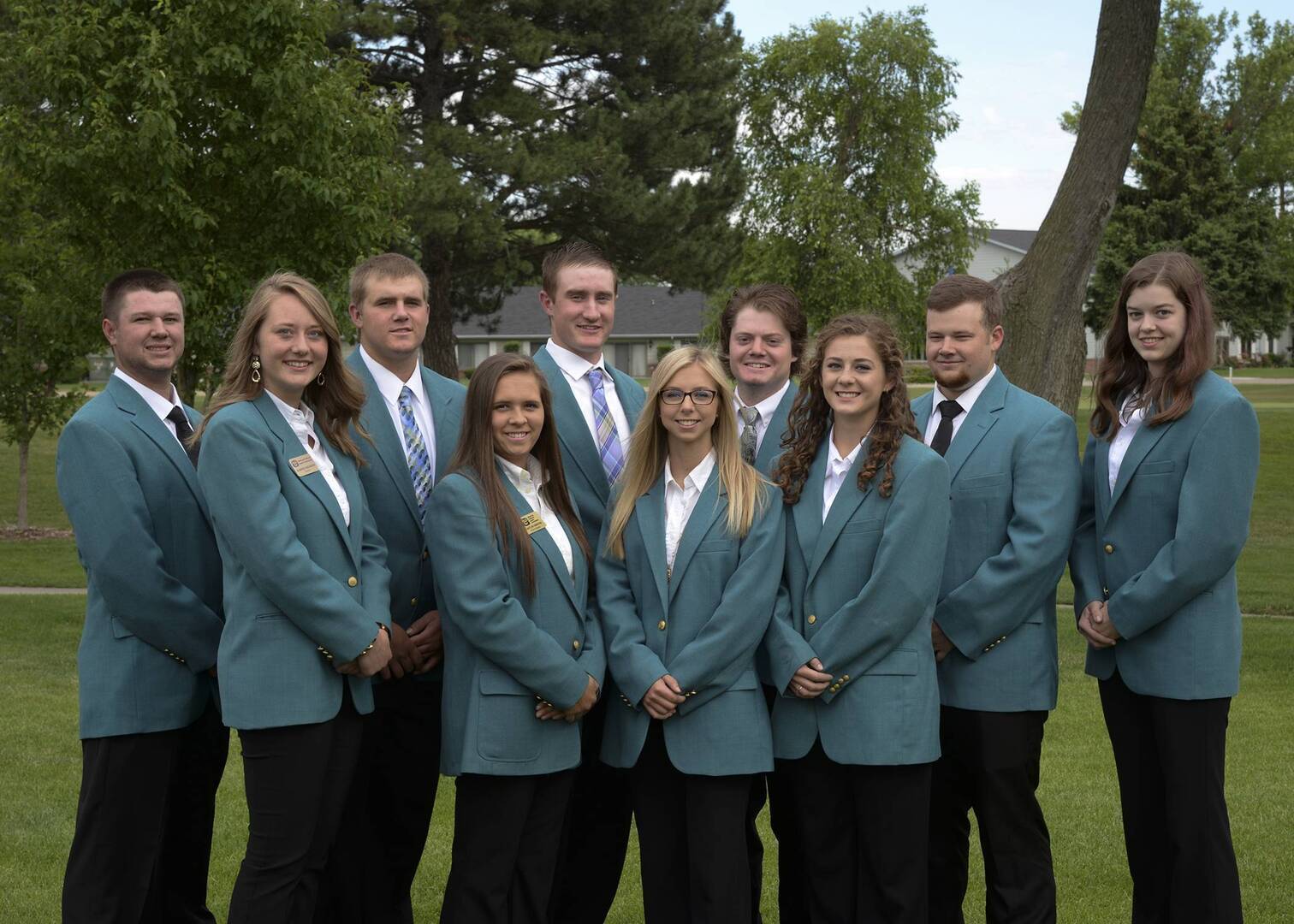
Photo Caption: The American Gelbvieh Junior Association elected directors and officers for 2017-2018 during the annual meeting in Grand Island, Nebraska. Front row (left to right): Ex-officio Aubree Beenken, Buckingham, Iowa; Treasurer Caitlin Griffin, Westminster, S.C.; Kallie Mattison, Lamberton, Minn.; Secretary Grace Vehige, Bonnots Mill, Mo. Back row (left to right): Wyatt Forbes, DeSmet, S.D.; Grady Hammer, Wallace, Kan.; President Callahan Grund, Wallace, Kan.; Vice President Kyle Vehige, Bonnots Mill, Mo.; Vice President of Leadership and Development Jesse Henson, Canton, N.C.; Anna Ring, Oregon, Ill.

Members of the American Gelbvieh Junior Association (AGJA) elected five candidates to serve two-year terms and one candidate to serve a one-year term on the AGJA Board of Directors. The election was held at the 2017 Big Red Classic in Grand Island, Nebraska, on June 28, 2017.
The AGJA Board of Directors consists of nine AGJA members and one ex-officio member. Directors serve two-year terms and must be 16 years of age as of January 1, and many not have reached his or her 20th birthday as of January 1.
Newly elected board members are Wyatt Forbes, DeSmet, South Dakota, son of Troy and Pam Forbes; Grady Hammer, Wallace, Kansas, son of Lyle and Christy Hammer; Kallie Mattison, Lamberton, Minnesota, daughter of Scott and Sonia Mattison; Anna Ring, Oregon, Illinois, niece of Skyler and Annette Martin; Grace Vehige, Bonnots Mill, Missouri, daughter of Tom and Stacy Vehige. Callahan Grund, Wallace, Kansas, son of Jerry and Chrysanne Grund, was re-elected to serve a one-year term.
The Board of Directors also elected individuals to serve in leadership positions on the 2017-2018 AGJA Executive Committee. Callahan Grund was elected president. Kyle Vehige, Bonnots Mill, Missouri, son of Tom and Stacy Vehige, was elected vice president. Vice president of leadership and development is Jesse Henson, Canton, North Carolina, son of Donnie and Kelly Henson. Grace Vehige will serve as secretary. Caitlin Griffin, Westminster, South Carolina, granddaughter of Ricky and Judy Griffin, will serve as treasurer. Aubree Beenken, Buckingham, Iowa, daughter of Marc and Angie Beenken will serve the board as ex-officio.
Retiring members of the 2016-2017 Board of Directors were Tanner Aherin, Phillipsburg, Kansas, son of Dennis and Joyce Aherin; Sydney Bigger, Media, Illinois, daughter of Barry and Jody Bigger; Tiana Garcia, Las Animas, Colorado, daughter of Keith and Teresa Garcia; Carter Mitchell, Appleton City, Missouri, son of Kevin and Debbie Mitchell and Colton Spencer, Aurora, Missouri, son of Jim and Janella Spencer.
https://gelbvieh.org/wp/wp-content/uploads/2019/04/AGALogo1.png 0 0 AGA https://gelbvieh.org/wp/wp-content/uploads/2019/04/AGALogo1.png AGA2017-07-17 13:17:072017-08-07 10:36:44American Gelbvieh Junior Association Elects Leadership

Office Hours

Monday-Friday
7:30 a.m.-4:00 p.m. CT

AGA REGISTRY SERVICE

  • Login
  • Animal Search
  • Member Search
  • Tutorials
  • Marketplace

Contact Us

American Gelbvieh Association
1001 S. 70th Street
Suite 215
Lincoln, NE 68510

303-465-2333

info@gelbvieh.org


Careers

Privacy Policy


© 2026 - American Gelbvieh Association | All rights reserved | Managed by EDJE |